


As the world transitions towards a more sustainable future, the importance of harnessing renewable energy sources has never been more pressing. Solar power, in particular, has emerged as a viable and eco-friendly solution for powering homes, businesses, and off-grid applications. The solar charge controller is at the heart of a successful solar system, a critical component that ensures battery-safe and efficient charging. Among the many options available, a Victron MPPT 100 20 Solar Charge Controller has established a reputation for its exceptional performance, reliability, and versatility.
What is a Solar Charge Controller
In the realm of solar power, a crucial component that plays a vital role in harnessing the sun’s energy is the solar charge controller. This ingenious device acts as a gatekeeper, managing the flow of electricity from the solar panels to the battery, ensuring a safe and efficient charging process. A solar charge controller, like Victron’s MPPT 100/20, is designed to optimize the charging of deep-cycle batteries, maximizing their lifespan and overall performance.
Think of a solar charge controller as a traffic cop, directing the electric current to the battery while preventing overcharging, which can harm the battery’s health. Without a solar charge controller, the solar panels would dump their excess energy into the battery, potentially causing damage or destruction.
In contrast, a high-quality solar charge controller like the Victron MPPT 100/20 has sophisticated algorithms that detect and adjust to changing environmental conditions, such as temperature, voltage, and current. This intelligent technology ensures that the solar panels operate within their optimal range, increasing efficiency and reducing energy losses.
By integrating a solar charge controller into your solar power system, you can rest assured that your batteries will be charged safely, efficiently, and reliably, allowing you to harness the full potential of the sun’s energy.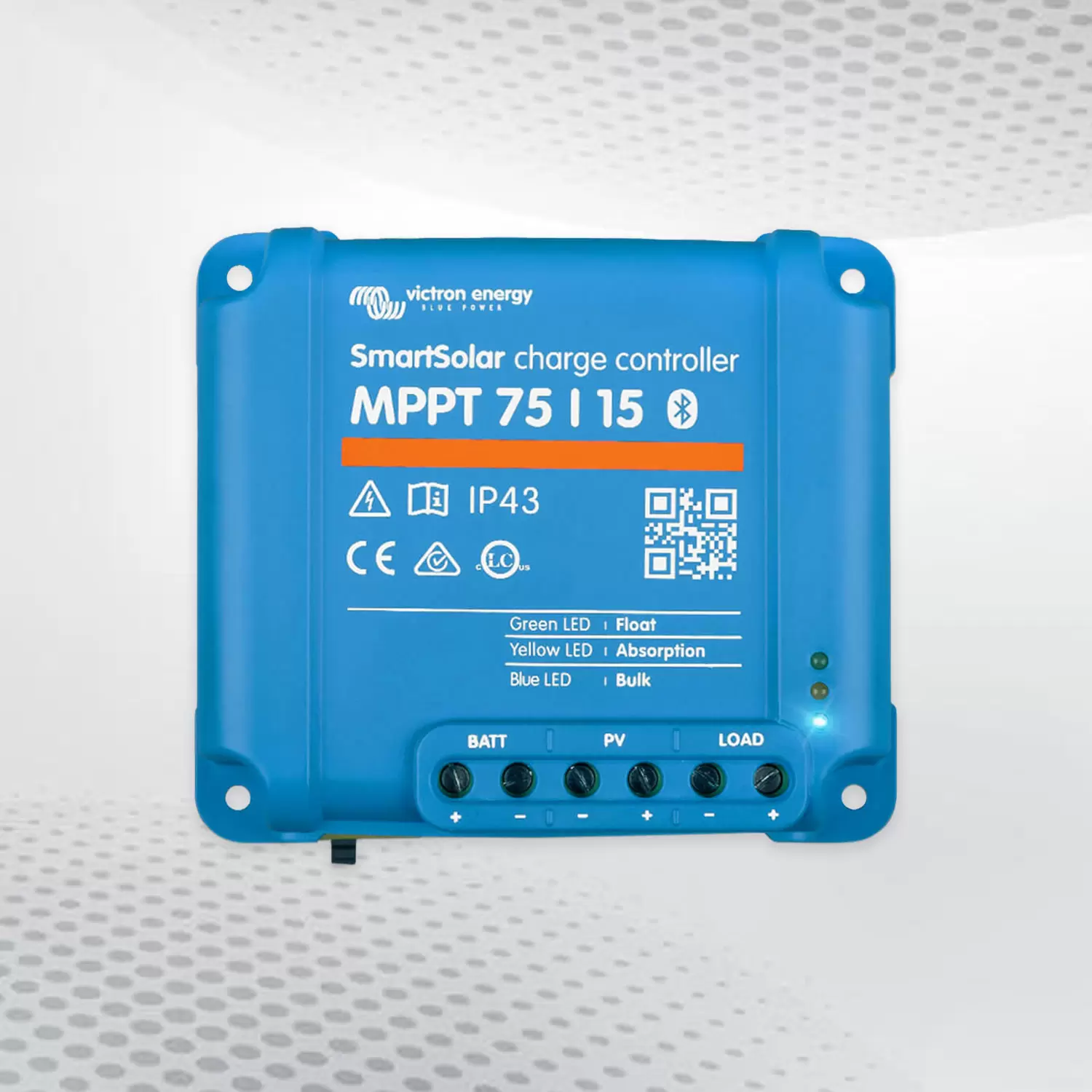
Key Features of the MPPT 100/20
The Victron MPPT 100/20 is a solar charge controller designed to optimize the power output from your solar panels and charge your batteries in an off-grid system. Here are its key features:
- MPPT Technology:This stands for Maximum PowerPoint Tracking. Unlike older PWM controllers, MPPT ensures your solar panels operate at their optimal voltage output, which can increase energy harvest by up to 30% compared to PWM controllers, especially in changing light conditions.
- Ultra-Fast MPPT:The Victron MPPT 100/20 continuously monitors voltage and current from your solar panels to adjust and optimize power output rapidly.
- Automatic Voltage Recognition:This controller can automatically detect 12v, 24v, or 48v battery systems, offering flexibility for different setups.
- Programmable Charge Algorithm:The MPPT 100/20 allows you to program the charging process to suit different battery types, including lead-acid and lithium batteries.
- Intelligent Battery Management:The controller adjusts charging parameters based on your battery’s condition, helping to extend battery life and optimize performance.
How to Choose the Right Solar Charge Controller
When harnessing solar energy’s power, one of the most crucial components of a successful solar setup is the solar charge controller. This critical device plays a vital role in ensuring your solar panels function efficiently and safely, converting DC power from the panels into usable DC power for your battery bank. With so many available options, selecting the suitable solar charge controller for your specific needs can be daunting. This section will explore the key factors to consider when choosing the perfect solar charge controller for your Victron MPPT 100/20 solar setup.
First and foremost, consider the power output of your solar panels. The Victron MPPT 100/20 is designed to handle up to 100A of solar power, making it an ideal choice for systems with a higher power output. Next, think about the type of battery bank you’re using. Different types of batteries require different charging profiles, so it’s essential to choose a solar charge controller that can accommodate your specific battery setup.
Another critical factor to consider is your solar charge controller’s maximum voltage and current ratings. For example, the Victron MPPT 100/20 has a maximum voltage rating of 150V and a maximum current rating of 100A. Make sure to choose a solar charge controller with a rating that matches or exceeds the maximum output of your solar panels.
Benefits of Using an MPPT Charge Controller
As the world continues to shift towards a more sustainable and eco-friendly future, the importance of harnessing renewable energy sources like solar power cannot be overstated. Victron’s MPPT 100/20 Solar Charge Controller is a testament to this commitment, offering a cutting-edge solution for maximizing energy harvesting from your solar panels. One of the most significant advantages of using an MPPT charge controller like the Victron MPPT 100/20 is its ability to increase energy conversion efficiency significantly.
Traditional PWM charge controllers can be inefficient, often losing up to 20% of the energy generated by your solar panels. They are limited by their fixed voltage and current output, which can’t adapt to your solar panels’ changing conditions. In contrast, the MPPT 100/20’s advanced algorithm can detect and adjust to your solar panels’ maximum power point in real-time, ensuring that every last bit of energy is harvested and converted into usable power.
How to Install and Configure the MPPT 100/20
Installing and configuring the Victron MPPT 100/20 solar charge controller is a crucial step in unlocking your solar power system’s full potential. While it may seem daunting at first, the process is relatively straightforward, and with the right guidance, you can have your system up and running in no time.
The first step is to ensure that the controller has a suitable mounting location. This will typically involve installing a sturdy bracket or mounting plate that can be secured to a wall or other surface. Once the controller is mounted, you’ll need to connect it to your solar panels and battery bank using the appropriate cables and connectors.
Next, you’ll need to configure the controller using Victron’s VE. Direct communication protocol. This involves connecting the controller to a computer or mobile device using a USB cable and then using Victron’s VE. Direct software to configure the controller’s settings. This includes setting the maximum PowerPoint tracking (MPPT) algorithm, adjusting the charge and discharge settings, and configuring the controller’s alarm and shutdown settings.
Once the controller is configured, connect it to your solar panels and battery bank. This involves connecting the positive and negative wires from the solar panels to the controller’s input terminals and then connecting the output wires from the controller to the battery bank. Make sure to follow the manufacturer’s instructions for the correct wiring configuration.
After installation and configuration, it’s essential to test the system to ensure it functions correctly. It involves monitoring the system’s performance using Victron’s VE. Direct software and make any necessary adjustments to the controller’s settings to optimize the system’s performance.
The Role of Victron 100 20
The Victron 100 20 plays a critical role in optimizing the performance and efficiency of solar energy systems. Here are the vital roles and functions it serves:
- Maximizing Energy Harvest: Its primary role is to maximize the energy harvested from solar panels. Continuously tracking and adjusting the solar array’s maximum power point (MPPT) ensures that the system extracts the highest possible energy from the sun throughout the day.
- Efficient Battery Charging: The MPPT 100/20 efficiently charges batteries by converting the DC power generated by the solar panels into a form suitable for charging various types of batteries. It optimizes the charging process to ensure batteries are charged quickly and effectively.
- Adaptability to Various Configurations: It supports a wide range of solar panel configurations, voltages (up to 100V), and current ratings (up to 20 amps), making it versatile for different system setups and sizes.
- Battery Protection and Longevity: The controller includes features like overcharge protection, temperature compensation, and low voltage disconnect to safeguard batteries from damage and prolong their lifespan
Tips and Tricks for Optimizing the MPPT 100/20’s Performance
As you delve into the world of Victron’s MPPT 100/20 Solar Charge Controller, it’s essential to understand the intricacies of optimizing its performance to unlock the true potential of your solar system. With this powerful device, you’re not just limited to a straightforward installation; you can fine-tune its settings to ensure maximum efficiency, reliability, and profitability.
One crucial tip is to ensure that your solar panels are correctly matched to the MPPT 100/20’s input voltage range. It will prevent any unnecessary stress on the system, which can lead to reduced performance and even premature wear. By choosing the correct solar panel configuration, you can guarantee a seamless and efficient energy transfer.
Another critical consideration is to monitor your system’s performance regularly. The MPPT 100/20 has a built-in multimeter, providing real-time data on voltage, current, and power. By closely monitoring these metrics, you can identify any potential issues before they become significant problems, such as a faulty solar panel or a malfunctioning charge controller.
By following these tips and tricks, you can unlock the full potential of Victron’s MPPT 100/20 Solar Charge Controller and create a solar system that’s reliable, efficient, and profitable. With these expert insights, you’ll be well on your way to harnessing the sun’s power and reducing your reliance on fossil fuels.
Conclusion
In conclusion, the Victron MPPT 100 20 solar charge controller is a powerful and reliable tool for harnessing the energy of the sun. Its advanced Maximum Power Point Tracking (MPPT) technology can extract the maximum amount of energy from your solar panels, even in low-light conditions. That makes it an ideal choice for applications where space and weight are limited, such as RVs, boats, and off-grid homes. Throughout this comprehensive guide, we have explored the features and benefits of the Victron MPPT 100/20 solar charge controller, from its high-efficiency MPPT algorithm to its robust build quality and ease of installation.
FAQS
What Does MPPT Stand For, And How Does It Benefit My Solar System?
MPPT stands for Maximum Power Point Tracking. It optimizes the energy harvest from solar panels by dynamically adjusting the voltage and current to ensure maximum power output, thereby maximizing energy efficiency and system performance.
What Is the Maximum Solar Panel Voltage and Current of the Victron MPPT 100 20?
The MPPT 100/20 can handle solar panel voltages up to 100V and a maximum current of 20 amps, making it suitable for various solar panel configurations.
Can The Victron MPPT 100/20 Be Used With Lithium-Ion Batteries?
Yes, the MPPT 100/20 is compatible with lithium-ion and sealed, gel, and flooded lead-acid batteries. It supports multiple battery chemistries and configurations.
| Other Good Articles to Read |
| skank blogs |
| unreal blogs |
| tba blogs |
| all city forums |
| dany blogs |
| refuge blogs |
| the music blogs |
| key forums |
| the big blog theory |
| joe blogs |
| blogs 4 me |
| Blogs Emon |
| Related Business Listings |
| Contact Directory |
| Local Business Profiles |